
What Is Digital Marketing? Owned, Paid & Earned Media
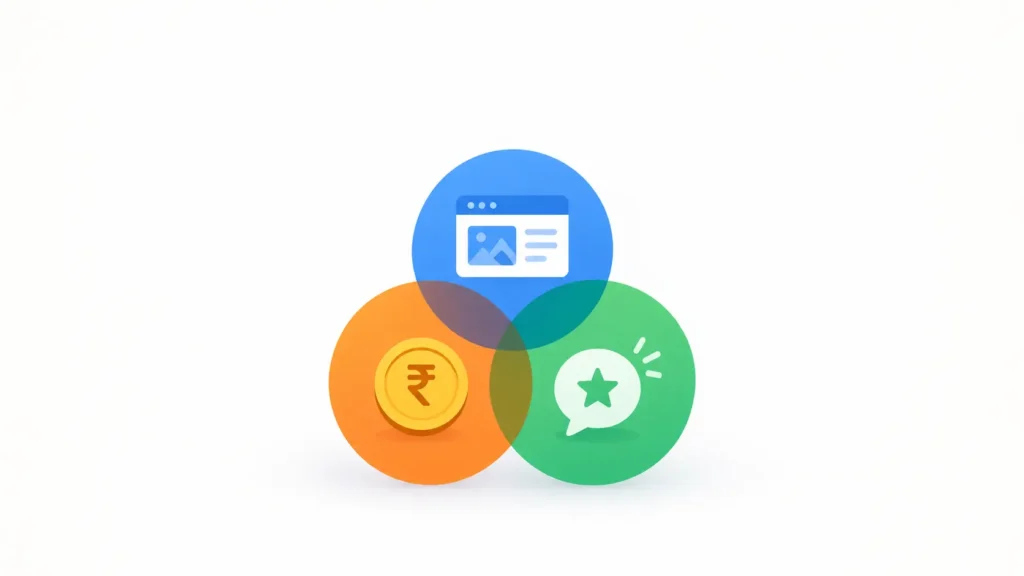
What is digital marketing? It is the practice of promoting a business, product or service through online channels such as search engines, social media, email, websites and video. Instead of depending only on banners, newspaper ads or word of mouth, a business meets people where they already spend their time: on their phones.
If you are new to this field, the terms can feel like a pile of jargon. SEO, SMM, PPC, reach, impressions, funnels. This guide answers what is digital marketing in plain language, then sorts every channel into three simple groups of digital media: owned, paid and earned. Once you see those three groups, the whole subject becomes much easier to plan.
What Is Digital Marketing? Meaning for Beginners
So, what is digital marketing in simple words? It is every effort to reach customers using the internet or electronic devices. The goal may be more website visitors, more enquiries, more sales, or simply more people who know your name.
The digital marketing meaning for beginners comes down to three jobs:
- Reach: put your message in front of the right people.
- Engage: give them something useful so they stay interested.
- Convert: turn that attention into an action, such as a call, a form fill or a purchase.
A small example makes this clear. Think of a tailoring shop in Kozhikode. The traditional approach is a banner outside the shop. The digital approach is a Google Business Profile, so people searching for a tailor nearby see the shop, an Instagram page showing finished work, and a WhatsApp button for orders. The shop is the same, but many more people can find it.
Digital marketing is also measurable. With a banner you can only guess how many people noticed it. With online channels, tools such as Google Analytics and Google Search Console show how many people visited, where they came from and what they did next.
The main channels you will hear about are:
- SEO (search engine optimisation): improving your website so it appears in unpaid Google results.
- Social media marketing: building an audience and promoting offers on Instagram, Facebook, LinkedIn or X.
- SEM and PPC: paying for ads on search engines, charged per click.
- Content marketing: publishing useful blogs, videos or guides that answer customer questions.
- Email marketing: staying in touch with people who have shared their address with you.
- Video marketing: showing your work or explaining your service through short and long videos.
Every one of these channels falls into one of three types of digital media, and that grouping is what the rest of this guide explains.
Types of Digital Media: How Digital Marketing Channels Are Grouped
Marketers sort their channels into three types of digital media: owned, paid and earned. Here is each one in a single line:
- Owned media: channels you control, such as your website, blog, email list and social profiles.
- Paid media: attention you pay for, such as Google Ads, Instagram ads and sponsored posts.
- Earned media: attention other people give you, such as reviews, shares, mentions and backlinks.
A quick test helps when you are unsure which group a channel belongs to. Ask three questions. Do I control it? Am I paying for it? Or did someone else give it to me? The answer tells you the type.
If you want to understand what is digital marketing at a deeper level, think of the three types as a three-legged stool. Owned media is the seat you build and sit on. Paid media speeds things up. Earned media proves that real people trust you. Take one leg away and the stool wobbles.
Owned Media in Digital Marketing: What You Control
Owned media is the part of digital marketing you fully control. You decide what is published, how it looks and when it changes. Common examples are:
- Your website and its service pages
- Your blog or video channel
- Your email list or WhatsApp broadcast list
- Your Google Business Profile
- Your social media profiles
Why it matters: owned media is the foundation. Every ad you run and every mention you earn should lead people back to something you own, usually your website. It is also the cheapest type over time, because a blog post written once can bring visitors for months.
The limit: owned media grows slowly, and nobody finds it automatically. A new website with no content gets almost no visitors. Social profiles are a special case. You control the posts, but the platform controls how many people see them, so it is wise to also build an email list or a website you fully control.
Beginner tip: start here. Before spending on ads, make sure your website clearly says who you help, what you offer and how to contact you.
Paid Media in Digital Marketing: Buying Attention
Paid media means you pay to put your message in front of a chosen audience. You choose the budget, the audience and the goal, and the platform shows your ad. Typical examples are:
- Google Search ads, where you pay when someone clicks
- Instagram and Facebook ads
- YouTube video ads
- Sponsored posts and influencer collaborations
Why it matters: paid media is the fastest way to get visitors. A well-targeted ad can reach people the same day it goes live, which helps when you are launching a new offer or have a new website that does not rank yet.
The limit: the traffic stops when the budget stops. Paid media also needs testing, because a poor ad or a weak landing page can waste money quickly.
Beginner tip: start with a small budget, one clear goal such as getting phone enquiries, and one audience. Track the cost of each enquiry, not just clicks. If a click costs little but nobody enquires, the problem is usually the page, not the ad.
This is also where SEM sits inside the larger picture of what is digital marketing: it is one paid channel, not the whole field.
Earned Media in Digital Marketing: Trust You Cannot Buy
Earned media is attention you receive because people choose to give it. Nobody is paid and you do not control the message. Examples include:
- Google reviews and testimonials from real customers
- Shares, comments and tags on social media
- Mentions in blogs, local news or other websites
- Backlinks, which are links from other sites to yours
- Word of mouth that moves online, such as a recommendation in a WhatsApp group
Why it matters: people trust other people more than they trust ads. A shop with many honest reviews usually looks safer to a new customer than a shop with none. Backlinks from relevant sites also help search engines see your website as trustworthy, which supports your SEO.
The limit: you cannot order earned media, and it can be negative as well as positive. It also builds slowly.
Beginner tip: you cannot buy it, but you can make it more likely. Give good service, then politely ask happy customers to leave a review. Publish helpful content that others want to share or link to. Reply to every review, including the critical ones, calmly and professionally.
Owned vs Paid vs Earned Media: What Is Digital Marketing Without the Right Mix?
None of the three types works well alone. Owned media gives you a base, paid media brings quick traffic to it, and earned media builds the trust that makes people act. Here is how they compare:
|
Feature |
Owned media |
Paid media |
Earned media |
|---|---|---|---|
|
Who controls it |
You |
You, within platform rules |
Other people |
|
Cost |
Time and tools |
Ad budget |
Time, service quality and effort |
|
Speed of results |
Slow to medium |
Fast |
Slow |
|
Trust level |
Medium |
Lower, as people know it is an ad |
High |
|
Examples |
Website, blog, email list, Google Business Profile |
Google Ads, Instagram ads, sponsored posts |
Reviews, shares, mentions, backlinks |
|
Main risk |
Nobody finds it without promotion |
Stops when budget stops |
Cannot be controlled or ordered |
A simple way to use all three: publish a helpful blog post on your website (owned), promote it with a small ad budget (paid), and make it easy for readers to share and link to it (earned).
How to Start With Digital Marketing: A Beginner Roadmap
Now that you know what is digital marketing and how its three media types fit together, here is a practical order to follow:
- Set one clear goal. For example: ten phone enquiries a month. A goal tells you which channel to use.
- Build your owned base first. A simple website, a verified Google Business Profile and one active social profile are enough to begin.
- Pick one social platform. Choose the one your customers actually use, and post there consistently instead of being on five platforms badly.
- Publish useful content. Answer real customer questions in blogs, short videos or posts. Keep the language simple.
- Try paid media in small steps. Test a small ad budget on one offer, and stop or change it if the cost per enquiry stays too high.
- Ask for reviews. After each good job, ask the customer to leave an honest review.
- Measure monthly. Check visitors, enquiries and where they came from, then do more of what works.
A common beginner mistake is jumping straight to ads without a clear website, so paid visitors land on a page that does not convince them. [ADD YOUR EXPERIENCE: one mistake you made or saw, and what you changed.]
FAQs: What Is Digital Marketing? Questions Beginners Ask
What is digital marketing in simple words?
Digital marketing is promoting a business, product or service through online channels such as websites, search engines, social media, email and video. The aim is to reach the right people, build interest and turn that interest into enquiries or sales. Unlike a printed banner, you can measure how each channel performs.
What are the three types of digital media?
The three types are owned, paid and earned media. Owned media is what you control, like your website. Paid media is attention you buy, like ads. Earned media is attention others give you, like reviews, shares and backlinks. Most strong digital marketing plans use all three together.
Is SEO part of digital marketing?
Yes. SEO is one channel inside digital marketing. It focuses on helping your website appear in unpaid search results. It sits mainly under owned media, because you improve your own website, and it is supported by earned media such as backlinks from other websites.
What is the difference between digital marketing and traditional marketing?
Traditional marketing uses offline channels such as newspapers, hoardings and pamphlets. Digital marketing uses online channels. The biggest practical difference is measurement: online tools can show who visited, from where and what they did next, which makes it easier to improve a campaign as it runs.
Do I need a degree to learn digital marketing?
No degree is required to start. Most people learn through courses, practice and real projects. What matters to clients is whether you can show real work and results. Start by building and improving your own website, then document what you did and what changed.
How can a small business start with digital marketing?
Begin with owned media: a clear website and a verified Google Business Profile. Then post consistently on one social platform and ask happy customers for reviews. Add a small paid budget once you know what your customers respond to. Measure results every month and adjust.
Conclusion: What Is Digital Marketing, in One Minute
What is digital marketing? It is promoting your business online in a way you can measure, using owned, paid and earned media together. Owned media is your base, paid media brings quick visitors, and earned media builds trust. Adobe’s guide to paid, owned and earned media describes the same three parts as one connected system.