
What Are Backlinks and Why Do They Matter for SEO?
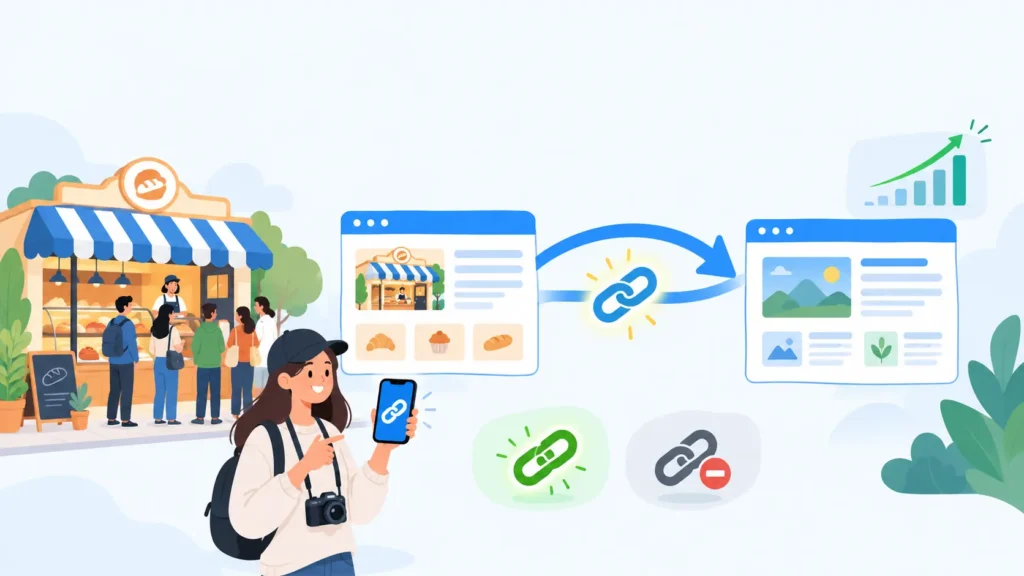
Why does one website sit on page one of Google while a nearly identical one is stuck on page five? Sometimes the writing is better. Very often, though, the difference is links. So, what are backlinks? A backlink is a link on someone else’s website that points to a page on yours. This guide explains what are backlinks in plain language, covers the main types of backlinks, breaks down dofollow vs nofollow, and shows how to get backlinks without putting your site at risk.
What Are Backlinks? A Simple Explanation
Picture a new bakery opening in your town. Nobody knows it exists. Then a popular local food blogger writes about it and tells her readers exactly where to find it. Customers show up, and more people start to trust the place because someone credible vouched for it.
So what are backlinks in everyday terms? Another website recommends yours by linking to it, and Google reads that link as a small vote of confidence.
Technically, what are backlinks in code? They are ordinary anchor tags. When site A links to your page, your page gets a backlink from site A. You may also hear them called inbound links or incoming links. The clickable words are called anchor text, and they give search engines a clue about what the linked page covers.
One detail beginners miss: ten links from ten different websites usually mean more than ten links from a single site. SEO tools call the number of unique linking websites “referring domains,” and that is the number worth watching.
Why Backlinks Matter: What Are Backlinks Doing for Your SEO?
Google was built on the idea that links work like votes. Its early PageRank system treated a link from a respected page as a stronger signal than a link from an unknown one. Search has changed a lot since then, but links are still one of the signals Google uses to judge which pages deserve to rank. Nobody outside Google knows the exact weight, so be wary of anyone who quotes you a precise percentage.
Here is what backlinks do in practice:
- They support rankings. Pages with links from relevant, trusted websites usually have an easier time competing for tough keywords.
- They help Google find your pages. Crawlers move from link to link. A new page linked from an already indexed page gets discovered faster.
- They bring referral traffic. A good link sends real people to your site, whether or not it helps your rankings.
- They build credibility. When a respected site mentions you, readers notice, and so do potential customers.
Now the honest part. Backlinks will not rescue weak content. If your page doesn’t answer the searcher’s question well, a hundred links won’t keep it up there for long. Write something useful first, then earn the links.
What Are Backlinks Made Of? Main Types of Backlinks
Ask ten beginners “what are backlinks?” and most will say “links to my site.” That’s true, but incomplete, because links come in different flavours and not all are worth the same.
There are two ways to sort the types of backlinks: by the attribute on the link, and by how the link was earned. Attributes come in the next section. Here is the “how it was earned” view, since that is what shapes your strategy.
| Type of backlink | How it happens | Value for SEO |
|---|---|---|
| Editorial (natural) | Another site links to you because your content is worth citing | Generally the highest. This is the goal |
| Guest post | You write an article for a relevant site and include a contextual link | High when the site is relevant and the link fits naturally |
| Contextual | A link placed inside a paragraph of related content | High, since the surrounding text adds meaning |
| Business listing | Your site appears in a directory or local citation | Moderate, and useful for local SEO even when nofollow |
| Social profile | Links on profiles such as LinkedIn or YouTube | Low for rankings, still good for visibility |
| UGC | Links in comments, forums and Q&A answers | Low, and usually marked ugc or nofollow |
| Sponsored | You pay for a placement or an ad | Brings traffic and brand exposure, but must be marked sponsored |
| Spammy (PBNs, link farms) | Bought in bulk or created on junk networks | Negative, and can lead to penalties |
A quick rule of thumb: the more a link looks like something a real editor chose on their own, the more it is worth. The more it looks like something you arranged just to get a link, the less it is worth.
Dofollow vs Nofollow: What Are Backlinks Telling Google?
This is where people get confused. A normal link has no special attribute. It is often called a “dofollow” link, but that is slang. There is no rel=”dofollow” tag. A link is simply followed by default.
Google gives site owners three attributes to describe how a link relates to the page it points to:
- rel=”nofollow”: a general signal that you don’t want to endorse the linked page.
- rel=”sponsored”: for advertisements and paid placements.
- rel=”ugc”: for links inside user-generated content such as comments and forum posts.
Google’s own documentation says links marked this way will generally not be followed. Since a 2019 update, Google treats these attributes as hints rather than strict commands, so a nofollow link may occasionally still count for something.
| Dofollow (default) | Nofollow, sponsored or ugc | |
|---|---|---|
| Attribute | None needed | rel=”nofollow”, “sponsored” or “ugc” |
| Passes authority | Yes, in the traditional sense | Treated as a hint, usually little or none |
| Typical sources | Editorial mentions, guest posts, partner sites | Ads, comments, forums, many social platforms |
| Still useful? | Strongest for SEO | Yes, for referral traffic, brand visibility and a natural-looking profile |
Which should you chase once you know what are backlinks and how they are labelled? Dofollow links from relevant sites are the priority, but don’t ignore the rest. A healthy backlink profile has both. If every link to your site were a dofollow guest post, it would look engineered. To check any link, right-click it on the page, choose Inspect, and look for a rel attribute in the code.
What Are Backlinks Worth Earning? How to Get Backlinks Safely
If you remember one thing about what are backlinks and how to earn them, make it this: relevance beats volume. The best answer to how to get backlinks is to make something people have a reason to link to, then tell the right people about it. These are the methods I’d start with.
- Publish link-worthy content. Original surveys, checklists, free templates, calculators and clear how-to guides get cited. A generic 500-word post rarely does.
- Guest post on relevant sites. Pitch topics that fit the host site’s audience. One contextual link in the body or author bio is normal. Never write throwaway posts for sites you wouldn’t read yourself.
- Fix broken links. Find pages in your niche that link to a dead page, then suggest your relevant article as a replacement. It helps the site owner, so replies are far more likely than with cold begging.
- Reclaim unlinked mentions. If someone mentions your brand without linking, send a polite note asking them to add the link.
- Try digital PR. Respond to journalist and expert requests, share a useful data point, or comment on industry news. Real quotes in real articles earn real links.
- List your business properly. Add accurate details to Google Business Profile and relevant local or industry directories. Many of these links are nofollow, but they support local visibility and consistency.
- Partner with people you already know. Suppliers, colleges, event organisers, clients and community groups often run their own websites. A testimonial, an event page or a case study can earn a natural link.
- Improve what already works. Update your best-performing posts and share them again. Fresh, accurate content is easier to link to.
Whichever you pick, personalise every outreach email, offer value first, and expect most messages to get no reply. Link building is slow, and that is normal.
To keep track, use the Links report in Google Search Console, which is free, or a paid tool like Ahrefs or Semrush if you have access. Check for new links once a month and note which content attracted them.
Bad Backlink Mistakes: What Are Backlinks You Should Avoid?
Knowing what are backlinks at their best also means spotting the ones at their worst. Some links do nothing, and a few can hurt. Stay away from these:
- Buying links that are meant to pass ranking signals without marking them sponsored. Google’s link spam policies treat this as manipulation.
- Private blog networks (PBNs) and link farms built only to link out.
- Mass link exchanges (“link to me, I’ll link to you”) across unrelated sites.
- Comment and forum spam with a link in every post.
- Links from irrelevant or low-quality sites, such as a gambling site linking to a school blog.
- Repeating the same exact-match anchor text again and again. Mix branded, URL and descriptive anchors instead.
If you inherit a clearly spammy link profile, Google offers a disavow tool, but it is an advanced feature meant for serious cases. Most sites never need it.
FAQs: What Are Backlinks and How Do They Work?
What are backlinks in simple words? They are links from other websites to yours. Search engines treat them as recommendations, and the more relevant and trusted the recommending site is, the more the link counts.
How many backlinks do I need to rank? There is no magic number. Look at the pages already ranking for your keyword, check how many referring domains they have, and use that as a rough target.
Are nofollow backlinks useless? No. They may pass little ranking value, but they can still bring visitors and make your link profile look natural.
Can I buy backlinks? You can buy ads and sponsored placements, as long as the links are marked rel=”sponsored”. Paying for links that are meant to pass ranking signals goes against Google’s guidelines.
What are backlinks compared with internal links? Backlinks come from other websites. Internal links connect pages on your own site. Both matter, but only backlinks count as outside recommendations.
How long do backlinks take to improve rankings? It varies. Some pages move within weeks, others take months, and some never move if the content or the keyword is too competitive. Nobody can promise a timeline.
Final Thoughts: What Are Backlinks Really About?
So, what are backlinks really about? Trust. Each good link is a real site telling real readers that your page is worth their time. You can’t shortcut that, but you can earn it. Start with one genuinely useful page, find five relevant sites where it fits, and send five thoughtful emails this week. Then open Search Console next month and see who linked back.